
Warsaw · Mokotów
Smart training where standard methods are not enough.
Whether you live with a cardiovascular condition or diabetes, are coming back after an injury, or simply want your form monitored precisely — I match the effort to your physiology. You get the certainty that every session brings you closer to fitness, not to injury.
The first meeting is a conversation and measurements — no package commitment.
Who it is for
If you have heard “you'd better be careful”, this page is for you.
Most people who come to me have heard a cautious warning, but nobody explained HOW to train safely. Instead of giving up activity, we use measurements to build your strength, endurance and health with precision.
Diabetes and insulin resistance
Well-programmed exercise increases tissue sensitivity to insulin and helps muscles take up glucose. We check blood glucose around the session to catch a drop in sugar before it becomes a problem.
Hypertension and cardiovascular load
Heart-rate-controlled training lowers resting blood pressure and strengthens the heart muscle. Precisely dosed movement genuinely takes load off the circulatory system.
Return after injury or surgery
We move from “so it doesn't hurt” to full strength and function. I regularly assist at orthopaedic procedures and take hospital shifts, so I know how to load the musculoskeletal system safely after procedures and overuse.
Performance and aerobic thresholds
For seniors and athletes — for anyone who wants to approach sport with their head. Monitoring lactate and heart-rate zones lets us pick the load precisely: results without chronic fatigue or injury.
What makes these sessions different
I see what your body is doing — during, not after.
Real-time measurements on the gym floor mean no guessing. They let us dose the load precisely: we know exactly when to turn the screw for better results and when to give the heart or metabolism time to adapt safely.
Heart rate
Insight into heart-rate zones and recovery pace between sets — that is where safe intensity and growing endurance come from.
SpO₂
Blood oxygen saturation during exercise, checked continuously.
Blood glucose
Sugar measured before, during and after the session — for people with diabetes this is the basis, not an add-on.
Lactate
The threshold above which exercise stops being aerobic. It sets the intensity.
Measurement results are used to run the training. They are not a diagnostic test and do not replace a consultation or tests ordered by your doctor.
How it works
From a conversation to a plan — four steps.
No random exercises and no templates copied from the internet.
- 1
Interview and goals
We talk about your goals, your training history and your medical history, creating a clear starting point.
- 2
Measurements at rest
Before any movement we check the key parameters, such as blood pressure and blood glucose, for full comfort and safety.
- 3
Movement check and working ranges
We check your mobility and how your body responds to effort, to estimate your performance thresholds and safe working ranges.
- 4
Individual action plan
Based on the data collected and your goals we put together a precise training plan, cut exactly to what your body can do.
I want movement to be safe enough for you to stop being afraid of it.
Book your first consultationAbout me
Medical knowledge in the service of your form.
I combine academic knowledge with practice on the gym floor, giving you the safety and precision you will not find in standard training.
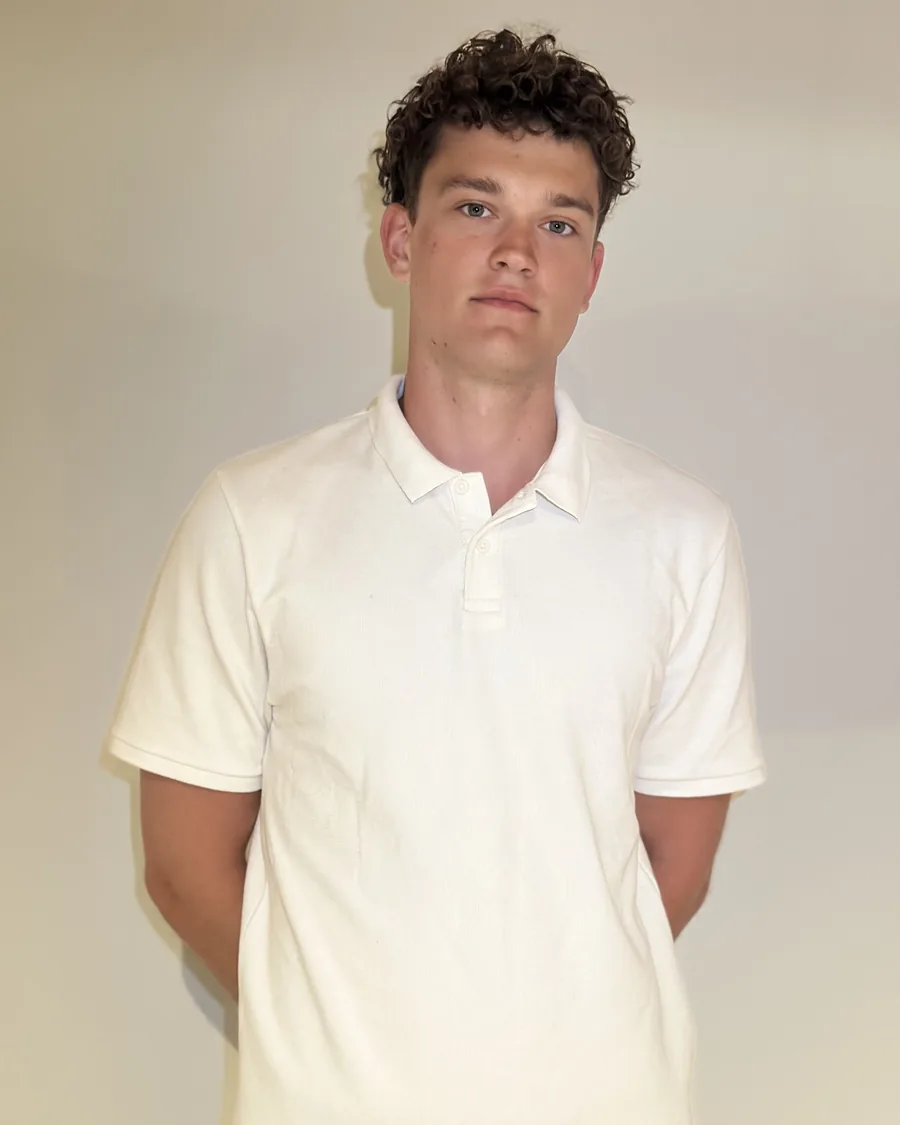
I am a 5th-year student of medicine at the Medical University of Warsaw and have been running personal training sessions for two years. Because of my interest in orthopaedics I regularly spend time in the emergency department and assist at orthopaedic operations. Understanding body mechanics and injuries from a clinical perspective lets me choose exercises and loads on the gym floor with precision.
I base my work on hard data — I have a research background and am an author of papers in orthopaedics, lifestyle medicine and oncology. I am also involved in the Trener Medyczny WUM (Medical Trainer) programme, which keeps me in constant contact with the doctors who co-create it. In more difficult cases I discuss my clients' situation directly with these specialists.
- Medicine (Medical University of Warsaw) — 5th-year student (studies run until 2028)
- Trener Medyczny WUM programme — ongoing cooperation with the programme's doctors
- Hospital practice — emergency department shifts and assisting at orthopaedic procedures
- Research output — lifestyle medicine, orthopaedics, oncology
- Personal training — 2 years of coaching clients
What it stands on
Concrete qualifications, no fluff.
A combination of medical education, current knowledge and hospital practice.
Medicine (Medical University of Warsaw)
5th-year student at the Faculty of Medicine, Medical University of Warsaw. Single-cycle master's programme, expected completion in 2028.
Trener Medyczny WUM programme
Completed training module and ongoing cooperation with the medical team.
- Regular consultation of training schemes and client outcomes with the programme's doctors
- Training programming for chronic conditions based on current scientific evidence (EBM)
- Advanced physiological monitoring (HR, SpO₂, blood glucose, lactate)
Clinical practice and research background
Regular presence in the orthopaedic emergency department and at procedures — hence the understanding of what may be loaded and when.
- Presence in the orthopaedic emergency department and assisting at operations
- Publications in English-language scientific journals (incl. Medical Oncology)
- Practical knowledge of pathophysiology, injury mechanics and movement limitations
Prices
Transparent, no asterisks.
We start with a consultation — only then is it clear whether, and which, package makes sense.
Prices set by Wiktor Gaik. The consultation covers an interview and baseline measurements — it is not medical advice.
Book a consultationFAQ
The questions I hear most often.
Do you train people with chronic or lifestyle conditions?
Yes. I work with people with insulin resistance, diabetes, heart failure, lipid disorders and joint problems, among others. The training is tailored to your health, and during the session we continuously monitor the key parameters (e.g. glucose, heart rate, SpO₂) to catch in time the moment we need to slow down, and so the effort brings real health benefits.
What is your education and medical background?
I am a 5th-year student of medicine at the Medical University of Warsaw (MUW), an author of scientific papers and a member of the Trener Medyczny WUM programme. Beyond the standard curriculum I deepen my knowledge by assisting in the orthopaedic operating theatre and the emergency department. This lets me combine a solid scientific background and first-hand knowledge of anatomy and musculoskeletal pathology with practical, safe resistance training.
Do I need my doctor's approval to start?
With a chronic condition, after surgery or after an injury — yes. The green light comes from your attending doctor, and I build the training within the limits they set. If you have not discussed it with your doctor yet, I will suggest which specific parameters and contraindications are worth asking about before you start.
What exactly do you measure during a session?
Heart rate, oxygen saturation (SpO₂), blood glucose and lactate concentration. We take the measurements to steer intensity precisely — they tell us not only when the body needs a break, but also exactly when we can safely add load and get the most out of the session.
When can I get back to exercise after surgery?
It depends on the type of procedure and the guidance of your surgeon or attending doctor. The safe date of return is set by the doctor. Once you have the green light, I build an adaptation plan that loads the tissues gradually and safely, avoiding overload around the operated area.
Your question is not here? Write to me — I will answer concretely and without fluff.
Contact
Write before you give up on movement for good.
Easiest on WhatsApp — tell me what troubles you and what you are worried about. I will answer concretely whether training makes sense in your case.
I run my sessions at Mokotowski Gym in Warsaw's Mokotów district.